
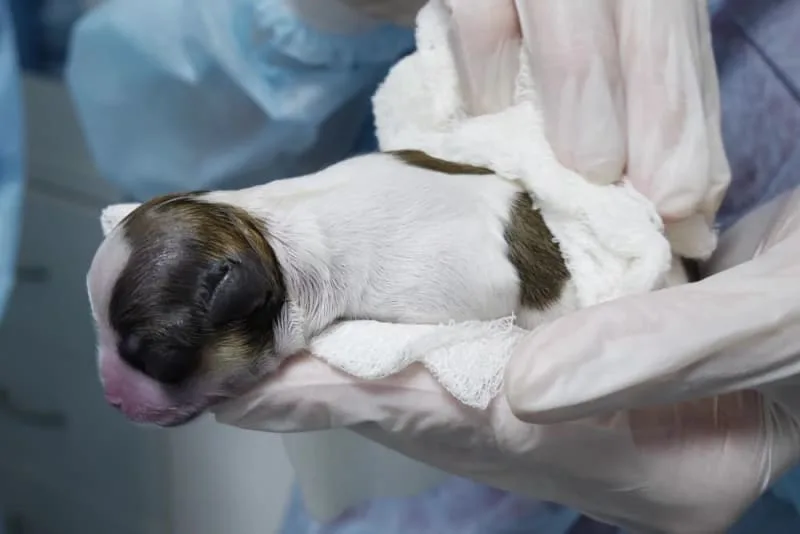
If a dog has gone into labor but things aren't going smoothly, an emergency c-section may need to be performed. But, in some instances, elective c-sections will be recommended if your dog is at risk for complications with the labor process. In this blog post, our Orlando vets explain everything you need to know about c-sections.
What Natural Labor Looks Like & When to Seek Emergency Help
Natural labor in dogs typically involves three stages: the beginning of contractions, the delivery of puppies, and the expulsion of the placentas. You may notice your dog becoming restless, panting, and nesting in the first stage.
Contractions will start, and the cervix will dilate. In the second stage, active labor begins, and puppies are delivered. You may see visible contractions and fluid discharge as each puppy is born. The third stage involves the expulsion of the placenta for each puppy.
When to Seek Emergency Help:
Prolonged labor: If your dog is in active labor for more than an hour without delivering a puppy, it is crucial to seek veterinary assistance immediately.
Weak contractions: If your dog has weak or infrequent contractions for over two hours without any puppies being born, contact your vet.
Green or bloody discharge: A green or bloody discharge without any puppies indicates potential complications and warrants an emergency visit to the vet.
Distress: If your dog appears to be in severe pain, is excessively panting, or shows signs of distress, seek veterinary help promptly.
When Elective C-Sections Are Recommended
While many healthy pregnancies can be processed in dogs without any medical intervention being required, in certain circumstances, an elective C-section may be recommended. Your dog may need a scheduled c-section if:
There is only one puppy - may not produce enough cortisol to induce labor in the mother
Puppies are very large
Your dog suffers from any underlying health conditions
If your dog needs a C-section, it will most likely be scheduled 63 days from ovulation, which should put the procedure within 24 hours of your dog's ideal due date.
How To Prepare for Your Dog's C-Section
Leading up to your pup's C-section, there are several things you can do to prepare:
Do not provide food on the day of the surgery
Water may be given until you leave for the vet's office
Stop using flea and tick products on your dog one week before her C-section
Apply an Adaptil (DAP) collar three days before the scheduled surgery
bath your dog a day or two before the surgery so that she is as clean as possible at the time of her c-section
Speak to your vet about any medications your dog is taking- they will let you know if you should withhold medications on the day of surgery
What to Take Along to Your Vet's Office
There are several things that you should take along when it's time to head to the vet for your dog's c-section, including:
Blankets and towels
Your changed cell phone
Large crate to keep your dog in
Heating pad and a way to power it - to keep puppies warm
Tarp, table cloth, or other easy clean covering for your seats or carpets in the car
Plastic laundry basket, ice chest without the lid, or strong cardboard box to carry puppies home in safely
Bulb syringe and DeeLee mucus trap should be on hand in case your dog gives birth en route to the vet's office
What to Expect On Surgery Day
Most vets request that you arrive an hour or two before the scheduled c-section surgery. Common procedures leading up to a c-section include:
Blood tests
Vaginal examination to check for signs of active labor
Wrapping tail to keep clean
Imaging such as X-rays or ultrasound
Placement of an IV catheter
Shaving your dog's abdomen
Once all of the pre-op procedures are completed, your dog will be taken to the surgery suite, where she will receive anesthesia, and the c-section will be performed.
How many C-sections can a dog have?
The number of C-sections a dog can safely undergo depends on her health, breed, and individual circumstances. Generally, most veterinarians recommend limiting the number of C-sections to two or three throughout a dog’s lifetime. Each surgery carries risks, and repeated procedures can increase the likelihood of complications. Always consult your veterinarian to determine your pet's safest course of action.
What is the cost of a C-section for a dog?
The cost of your dog's C-section can change due to several factors, including your dog's size and breed, your dog's age, and whether they have any health issues that could cause complications.
After Your Dog's C-Section Surgery
When you return home, your dog and her puppies will need to be monitored closely. Your vet will provide detailed instructions about monitoring puppies and their mothers and prescribe pain medications for your dog.
Following your vet's instructions carefully can help you spot issues before they become more severe.
When To Call The Vet
How long it will take for your dog to recover from her c-section will vary based on her overall health, difficulties during pregnancy, and other factors. Most dogs will fully recover within about three weeks.
If your dog shows signs of fever, stops eating, isn't drinking, develops a swollen mammary gland, or shows signs of infection at the incision site, it's time for an urgent call to your vet.
Also, contact your vet if the puppies aren't nursing well, seem fussy, have dark-colored urine, or aren't gaining weight
Note: The advice provided in this post is intended for informational purposes and does not constitute medical advice regarding pets. For an accurate diagnosis of your pet's condition, please make an appointment with your vet.
Is your dog pregnant? Contact our Orlando vets to schedule an examination. Our vets have experience performing C-section surgeries on dogs to produce healthy puppies.